Battery Behemoth
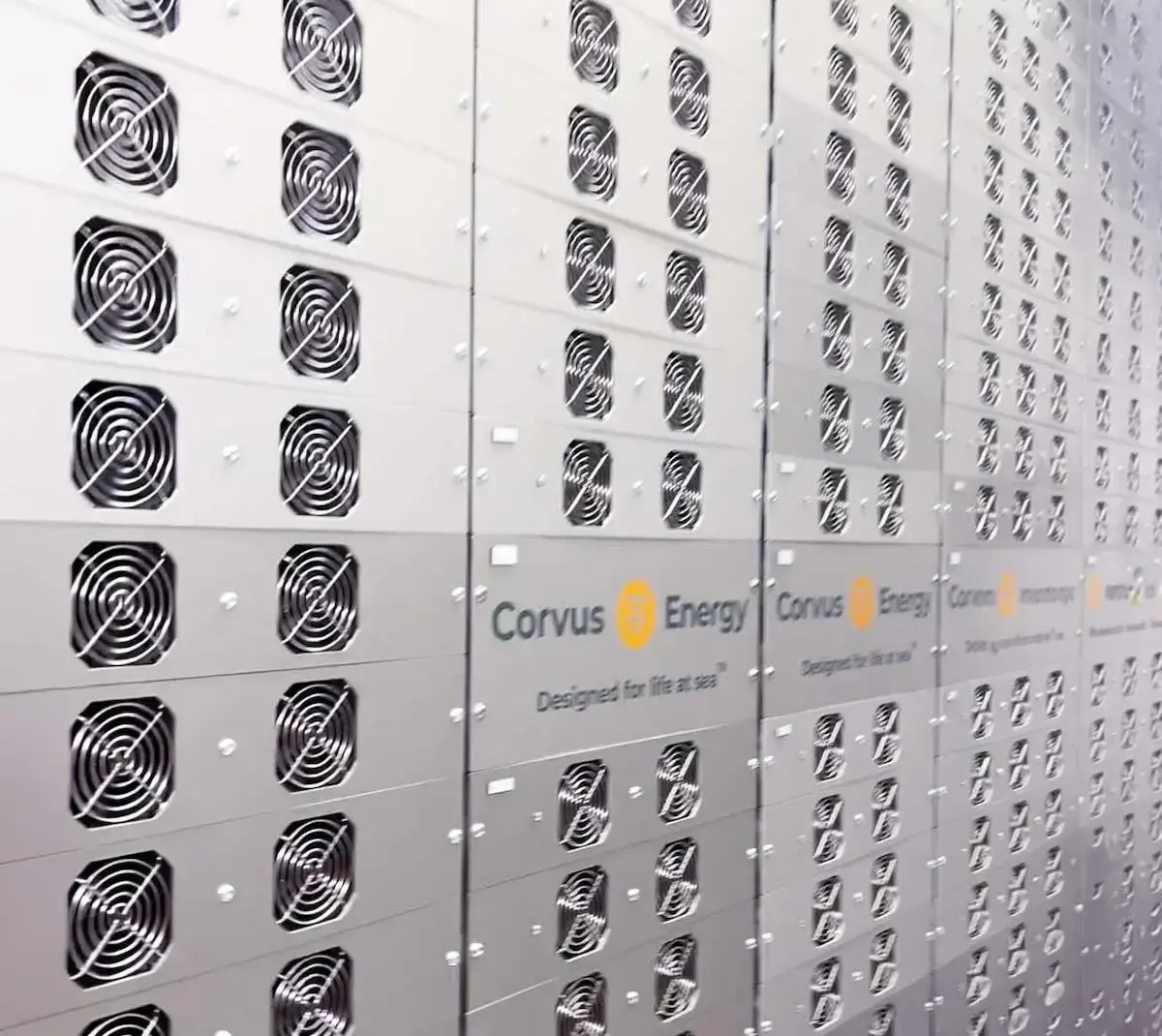
The world's largest battery-electric ferry, the China Zorrilla, has taken to the seas, powered by an enormous onboard battery system. Measuring 130 metres in length, the vessel is a marvel of modern engineering. Its battery rooms are a testament to the scale of the project.
Step inside one of the battery rooms and the enormity of the task becomes clear. Behind thick insulated walls, rows upon rows of lithium-ion batteries stretch out, totalling 5,016 individual modules. The energy storage capacity is impressive, with over 40 megawatt-hours (MWh) on tap.
The sheer scale of the battery system is awe-inspiring. The 5,016 battery modules are carefully arranged to maximize energy storage and efficiency. This massive battery pack enables the ferry to operate without traditional fossil fuels, reducing its environmental impact.
Can Battery Tech Keep Pace with Demand?
As the world shifts towards cleaner energy, the demand for large-scale battery systems is growing. The China Zorrilla is at the forefront of this trend, showcasing the potential for battery-electric propulsion in large vessels. With its massive 40 MWh energy storage capacity, the ferry is a significant step towards a more sustainable maritime industry.
The success of the China Zorrilla has significant implications for the future of the maritime industry. As battery technology continues to advance, we can expect to see more large vessels adopting electric propulsion, reducing greenhouse gas emissions and operating costs.
Frequently Asked Questions
Q: How much energy does the ferry's battery system store? A: The battery system has a total energy storage capacity of over 40 megawatt-hours (MWh). This enables the ferry to operate efficiently without traditional fossil fuels.
Q: What type of batteries are used in the ferry's battery system? A: The ferry is equipped with lithium-ion batteries, totalling 5,016 individual modules.
Q: What is the significance of the China Zorrilla's battery-electric propulsion? A: The China Zorrilla is a pioneering vessel, showcasing the potential for large-scale adoption of battery-electric propulsion in the maritime industry, reducing environmental impact and operating costs.