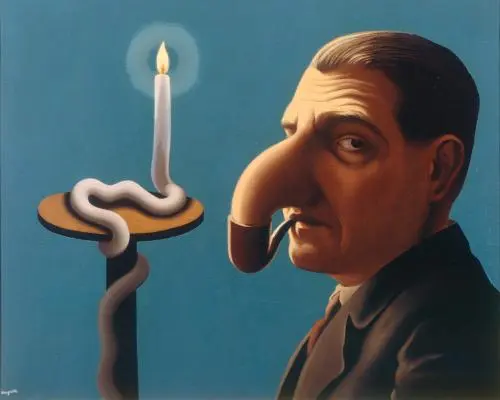
The Playful Assault on Psychoanalysis
The Musée des Arts Modernes opened a major René Magritte exhibition on Tuesday, showcasing over a hundred paintings, sketches, and photographs. The show runs through December, drawing visitors from across Europe eager to confront the Belgian master’s baffling visual riddles. Curators emphasize the collection’s breadth, from early experiments to late masterpieces, offering a rare, comprehensive look at his career.
Magritte’s art defies easy categorization. Unlike Cubists such as Cézanne or Picasso, who sought logical deconstruction of form, he built deliberate mysteries that tease the mind. Critics note his clever satire of both psychoanalysis and Surrealist doctrine, mocking the seriousness of Freud’s theories while embracing dreamlike absurdity. The exhibition arranges works thematically, revealing how he repeatedly returned to motifs of clouds, bowler hats, and ordinary objects placed in impossible contexts. Curator Léa Dubois explains, „Magritte wanted us to question what we accept as reality, to see the familiar as strange.” His technique—precise brushwork combined with uncanny juxtapositions—creates a visual paradox that continues to puzzle scholars.
Magritte’s paintings often echo Freudian concepts without reverence. In „The Lovers” (1928), masked faces suggest hidden desires, while „The Human Condition” (1933) blurs the line between perception and representation, hinting at the unconscious mind’s distortions. Art historian Marco Vandenberg argues that Magritte used these images to lampoon the era’s obsession with uncovering hidden motives. „He turned the therapist’s couch into a stage,” Vandenberg says, „forcing viewers to confront the absurdity of over‑analysis.” The exhibition’s accompanying catalogue includes essays that trace this critical dialogue, showing how Magritte’s humor undercut the solemnity of contemporary psycho‑theory.
Why Does Magritte Still Captivate Audiences Today?
The question lingers: what keeps Magritte relevant in a world saturated with visual media? Visitors report feeling both unsettled and amused, a dual reaction the artist intended. His ability to transform everyday items into enigmatic symbols resonates with a generation accustomed to rapid information flow and meme culture. The museum’s interactive zone lets guests rearrange familiar objects, echoing Magritte’s own practice of re‑contextualizing reality. This hands‑on experience underscores his lasting influence on modern design, advertising, and digital art, where the unexpected continues to command attention.
As the exhibition closes, its impact appears clear. Magritte’s deliberate contradictions invite ongoing debate about the nature of meaning in art. Future retrospectives may explore his influence on contemporary creators, while scholars anticipate fresh interpretations of his satirical edge. The show reaffirms his place as a master of visual paradox, reminding us that mystery can be both intellectual exercise and playful delight.
Frequently Asked Questions
What are the highlight pieces in the exhibition? Key works include „The Son of Man,” „The Treachery of Images,” and a rare series of unpublished sketches that reveal his creative process.
How does the museum present Magritte’s satire of psychoanalysis? Through thematic rooms, explanatory panels, and audio guides that link specific paintings to Freud’s concepts, highlighting the artist’s ironic commentary.
Is the exhibition suitable for families with children? Yes; interactive stations and guided tours are designed for all ages, encouraging younger visitors to explore visual puzzles in a fun, educational setting.