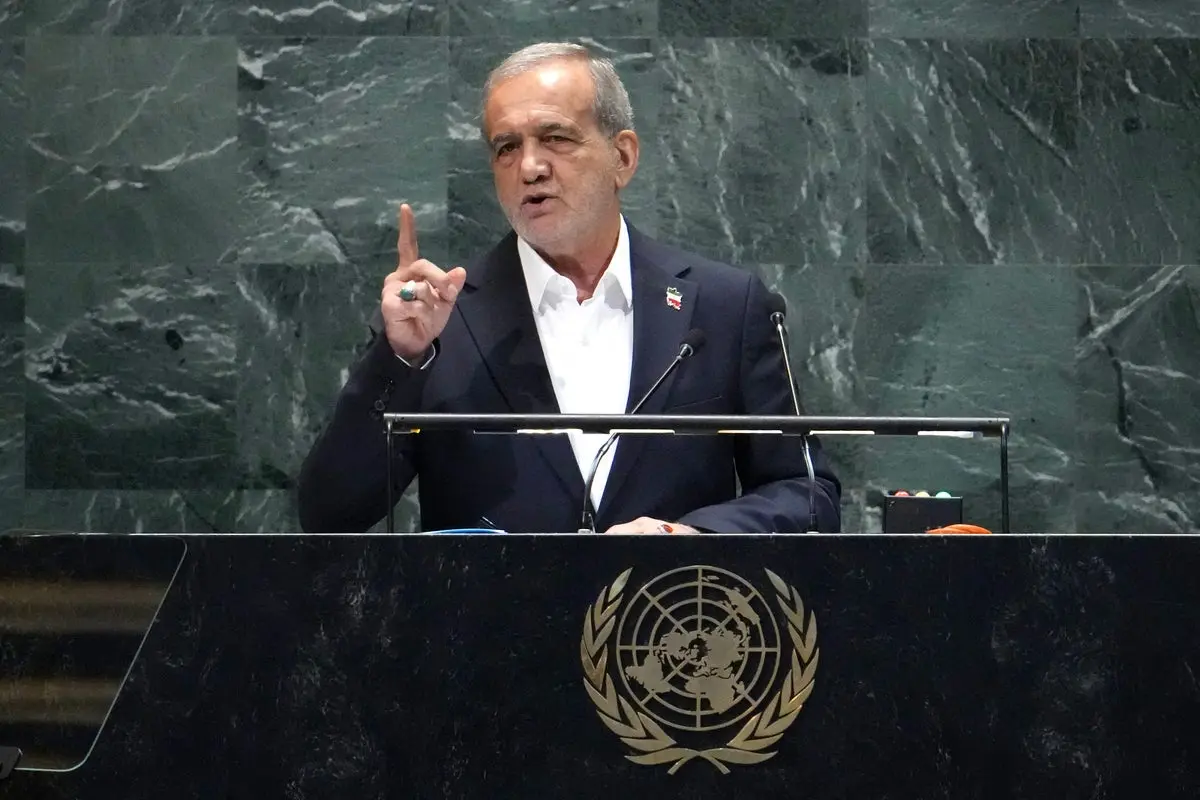
How Will Pezeshkian Respond to Dual Pressures?
Iranian President Masoud Pezeshkian addressed the United Nations General Assembly on September 23, 2026, following a stark warning from former U. S. President Donald Trump. Trump declared he had only two options for dealing with Iran, framing one as potential annihilation. Pezeshkian now confronts a similar dilemma as he seeks to navigate rising tensions while defending his nation's sovereignty on the global stage. His speech came amid heightened diplomatic friction over Iran's nuclear program and regional influence.
The context stems from Trump's renewed hardline stance, echoing his previous administration's withdrawal from the 2015 nuclear deal and reimposition of sanctions. During his UN remarks, Trump asserted that Iran must either abandon its uranium enrichment activities entirely or face severe consequences, which he did not rule out including military action. Pezeshkian, elected on a platform of engagement and economic relief, must balance domestic pressures for resistance with international calls for de-escalation. Analysts note his options are limited: comply with demands risking internal backlash, or resist and invite further isolation.
Can Diplomacy Still Prevail Amid Rising Hostility?
In his address, Pezeshkian emphasized Iran's right to peaceful nuclear technology while denying aspirations for weapons development. He called for renewed dialogue based on mutual respect and criticized what he described as unilateral U. S. actions undermining global non-proliferation efforts. The Iranian leader also highlighted the humanitarian impact of sanctions, particularly on access to medicine and food, urging the UN to intervene. Despite his conciliatory tone, he warned that any threat to Iran's sovereignty would be met with a decisive response, signaling readiness to defend national interests.
International observers remain skeptical about near-term breakthroughs, citing deep mistrust and conflicting red lines. European allies have urged both sides to return to negotiations, but Tehran insists sanctions must be lifted first as a precondition for talks. Meanwhile, regional actors including Israel and Saudi Arabia have expressed support for a firm U. S. posture, complicating multilateral efforts. Pezeshkian’s challenge lies in projecting strength without provoking escalation, a tightrope walk that could define his presidency and shape Iran’s foreign policy trajectory for years to come.
What were Trump's two options for dealing with Iran as stated at the UN? Trump said Iran must either completely halt its uranium enrichment program or face serious consequences, which he indicated could include military action, framing the choice as compliance or confrontation.
Frequently Asked Questions
Why is Pezeshkian's position considered difficult domestically? Pezeshkian faces pressure from hardliners at home who view concessions as weakness, while reformists expect him to improve living standards through diplomacy, leaving little room for perceived compromise without risking political backlash.
What did Pezeshkian say about Iran's nuclear intentions during his speech? He reiterated that Iran's nuclear program is solely for peaceful purposes, denied any pursuit of nuclear weapons, and called for fair negotiations based on equality and respect for national rights.