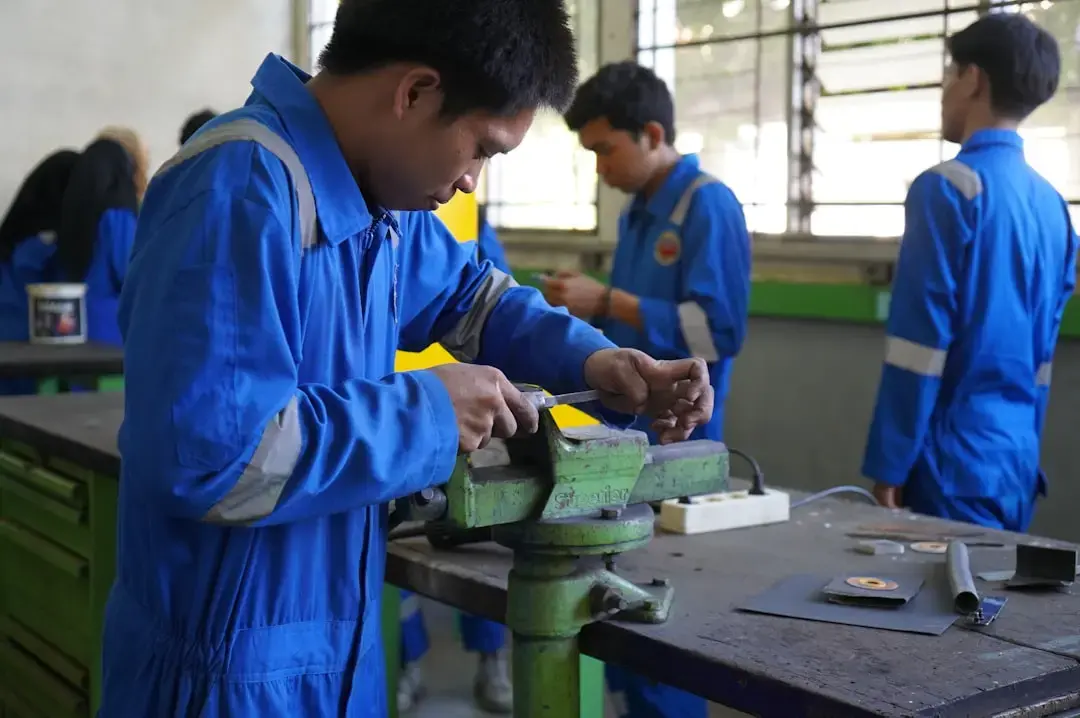
Employers Cite Red Tape and Unclear Incentives
The Department for Education reported that just 160 new apprenticeships have begun under the flagship Labour‑backed programme since its launch eight months ago. The figure, released in a briefing on Monday, falls far short of the government’s target of thousands of placements to fuel a „skills revolution.” Critics say the shortfall threatens the country’s ability to train workers for emerging industries.
The apprenticeship scheme, introduced by the Labour government in early 2024, was designed to bridge the gap between education and the labour market by offering paid, on‑the‑job training in high‑growth sectors such as green technology, digital services and advanced manufacturing. Funding was earmarked for thousands of slots, with local authorities and employers expected to partner in recruiting candidates. However, bureaucratic delays, limited employer uptake and a lack of clear guidance have slowed progress. Officials warned that without a rapid scale‑up, the nation could miss a critical window to upskill its workforce as the economy pivots toward greener and more digital operations.
Many small and medium‑sized firms have expressed frustration with the application process, describing it as „cumbersome” and „time‑consuming.” A spokesperson for a regional manufacturing consortium said the paperwork required to access funding often outweighs the perceived benefits. „We want to train the next generation, but the current system makes it hard to justify the administrative burden,” they explained.
Is the Skills Revolution at Risk?
Industry bodies also argue that the financial incentives attached to the scheme are insufficient. While the government offers a modest grant per apprentice, employers claim the amount does not cover the cost of supervision, equipment and lost productivity. As a result, several companies have postponed or cancelled planned apprenticeship slots, opting instead for short‑term contracts that lack the structured training component.
Analysts fear that the low uptake could signal deeper structural problems in the UK’s skills strategy. „If the apprenticeship pipeline stalls, we risk a talent shortage in sectors that are essential for economic recovery and climate goals,” noted a senior economist at a think‑tank specializing in labour markets. The economist warned that the shortfall could exacerbate wage pressures and increase reliance on foreign skilled workers, undermining the policy’s domestic focus.
The government has responded by pledging a review of the scheme’s rollout. A senior minister indicated that new guidance will be issued to simplify applications and that additional funding could be released to make placements more attractive. Yet skeptics argue that without tangible changes on the ground, the promised „skills revolution” may remain a slogan rather than a reality.
The limited start of apprenticeships underscores a widening gap between policy ambition and implementation. If the trend continues, the UK could fall behind rivals in Europe that are already expanding vocational training to meet the demands of a green and digital economy. Stakeholders urge swift action to remove barriers, increase employer incentives and ensure that the apprenticeship programme delivers on its promise to equip young people with the skills needed for tomorrow’s jobs.
Frequently Asked Questions
Why have only 160 apprenticeships started so far? Delays stem from complex application procedures, insufficient employer incentives, and limited awareness of the programme among potential participants.
What sectors were meant to benefit most from the scheme? The initiative targeted high‑growth areas such as renewable energy, digital technology, advanced manufacturing, and green construction.
What steps is the government taking to improve uptake? Officials plan to simplify the funding application process, increase financial support for employers, and launch a targeted outreach campaign to raise awareness among businesses and prospective apprentices.