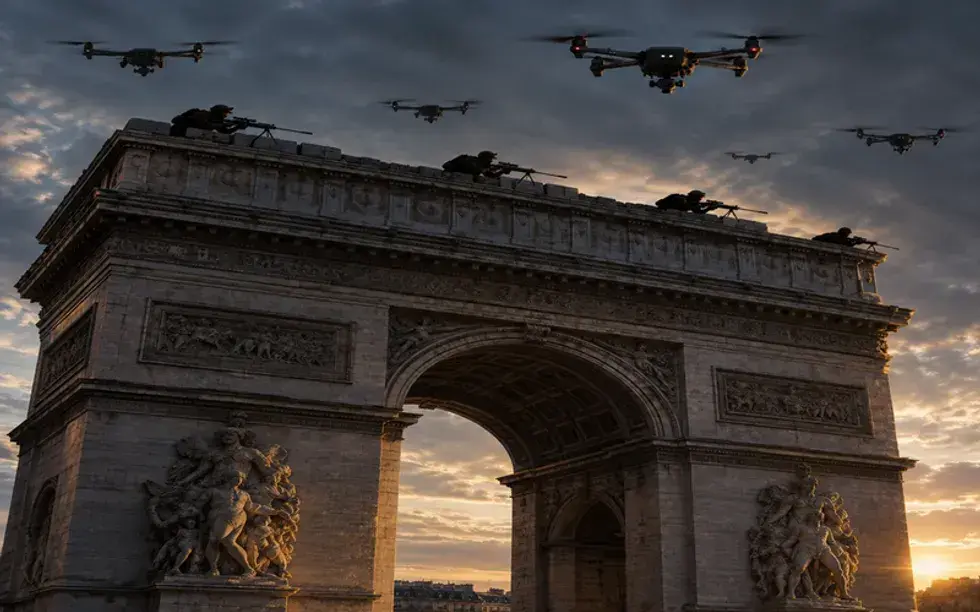
A Symbolic Monument Turned Tactical Platform
Washington – President Donald Trump announced plans to erect a monumental „Triumphal Arch” at the main entrance of Arlington National Cemetery. The structure, intended to honor American service members, will also house sniper positions and drone launch sites for what the administration calls „enhanced national security.” The proposal was unveiled during a briefing with senior defense officials on Thursday.
The idea emerged after a series of high‑level meetings between the White House and the Pentagon, where officials argued that the cemetery’s strategic location near Washington, D. C., makes it an ideal staging ground for rapid response assets. The arch would be constructed from reinforced steel and concrete, blending classical design with concealed military technology. Critics say the plan risks desecrating a hallowed site, while supporters claim it underscores the nation’s resolve against emerging threats.
Design sketches reveal a towering arch reminiscent of Rome’s ancient triumphal arches, complete with engraved names of fallen heroes. Hidden within the structure are reinforced chambers that can accommodate long‑range sniper teams and compact drone bays. Engineers say the arch will be camouflaged to blend with the surrounding landscape, minimizing visual impact while providing a secure launch point for unmanned aerial systems. The Pentagon estimates the project could cost up to $250 million, a figure that includes security upgrades to the cemetery’s perimeter.
Is It Appropriate to Militarize a National Shrine?
Military spokesperson Colonel James Whitaker emphasized that the dual‑use design „offers a rapid deployment capability without compromising the sanctity of the burial grounds.” He added that the arch would be staffed by a rotating crew of specially trained personnel, operating under strict rules of engagement. The administration argues that the proximity to the capital allows for faster reaction times in the event of a domestic or foreign crisis.
Civil‑rights groups and veterans’ organizations have voiced strong opposition, calling the plan „a profound disrespect to those who rest here.” The American Legion issued a statement urging the president to reconsider, noting that Arlington has long been a place of reflection, not combat readiness. Legal scholars point out that the National Cemetery Administration, which oversees Arlington, may lack authority to approve such a militarized installation without congressional approval.
In response, the White House released a memorandum asserting that the arch will not interfere with burial ceremonies or visitor access. The document claims the structure will be built „in harmony with the cemetery’s historic character,” and that any operational activities will be conducted discreetly, away from public view. Lawmakers from both parties have requested a briefing to assess the constitutional implications of turning a federal memorial into a tactical asset.
The controversy highlights a broader debate over the balance between security and reverence for national symbols. If the project proceeds, it could set a precedent for integrating defense infrastructure into other historic sites across the country. Conversely, strong public backlash might force the administration to abandon or redesign the concept.
Frequently Asked Questions
What is the purpose of the proposed arch? The arch is intended to serve both as a commemorative monument honoring U. S. service members and as a concealed platform for sniper teams and drones, enhancing rapid response capabilities near the capital.
How will the arch affect daily operations at Arlington? Officials say the structure will be built to avoid disrupting burial services or visitor traffic. Military activities are planned to be conducted covertly, with limited personnel on site at any given time.
What legal hurdles must the project overcome? The plan may require approval from the National Cemetery Administration and possibly Congress, as it involves altering a federally protected historic site for military use. Legal challenges could arise over the separation of memorial functions and defense operations.