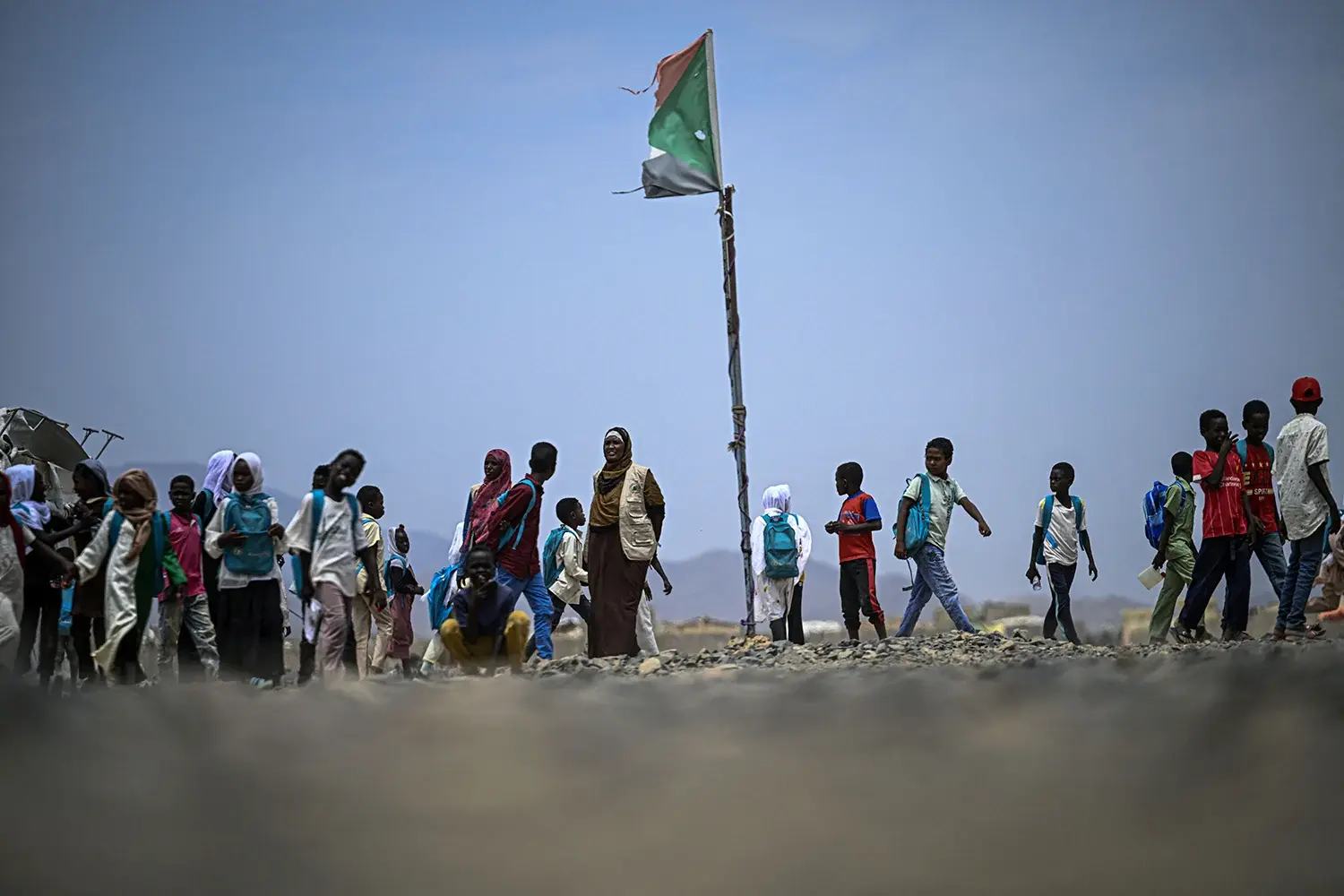
Sudanese Demand a Definitive Solution to the Conflict: How Can We Stop the War?
The humanitarian crisis in Sudan, spanning four years of uninterrupted conflict, has become the world’s most urgent emergency. The tragic toll includes at least 59,000 lives lost, while over 14 million citizens have been forced to flee their homes. Chronic hunger and widespread sexual violence have left millions in critical need of food, medical care, and psychological support. The Sudanese people know the war must end and, with divine help, it will. Yet after more than twelve failed ceasefire attempts mediated by international actors, it is time to end this confrontation irreversibly. The goal is to ensure gunfire does not resume when global attention shifts elsewhere.
This is the civilians’ main demand to me, as president of Sudan’s Transitional Sovereignty Council, and to other leaders responsible for governing the country: the war must stop definitively, and foreign interference that has shattered national unity and profited from our suffering must cease completely. It is essential to understand that Sudan’s conflict is not a simple dispute between two „factions” or a classic civil war. Our sovereign state and the Rapid Support Forces militia are not on equal moral or legal ground. The reality is that we face an aggression against a United Nations member state, carried out by a paramilitary group that survives through looting, killing, and ethnic cleansing. The RSF should not be legitimized or treated as an equal partner in negotiations.
Its leaders, including Mohamed Hamdan Dagalo and his top subordinates
Its leaders, including Mohamed Hamdan Dagalo and his top subordinates, are the same commanders who ordered the Janjaweed militia to pillage and massacre non-Arab communities in Darfur in the early 2000s. Last year, the 30-month siege of El Fasher ended in a massive massacre. Entire neighborhoods were destroyed, families killed in their homes, and bodies left in the streets with no one to bury them. Before the assault, the United Nations counted over 260,000 civilians trapped inside the city, half of them children. Since El Fasher fell in October 2025, the UN has recorded approximately 127,000 people displaced from the city and surrounding villages. Although independent researchers could not access the area, Yale University satellite analysts uncovered evidence of mass graves, suggesting deliberate civilian killings. In parallel, a UN fact-finding mission concluded that the atrocities bear „the hallmarks of genocide.” A militia cannot sustain a war of this scale alone.
Since 2024, hundreds of foreign fighters have bolstered the RSF’s ranks, recruited through networks funded by transnational entities active in multiple countries. This reality has been widely acknowledged: in June, the U. S. Treasury Department sanctioned eight individuals and entities linked to these networks. Last month, drones struck Khartoum and other cities in the largest coordinated salvo in months, demonstrating ever-more sophisticated military capacity enabled by foreign interference. To ensure lasting peace, it is imperative that the arms embargo be imposed strictly. Only after establishing an effective barrier against arms flows can Sudan regain stability. The international community must move beyond statements to concrete actions, guaranteeing that no external actor can further influence the conflict’s trajectory. It is time for Sudan to reclaim its sovereignty and dignity, removing from the political equation those forces that have turned an internal dispute into a complex regional crisis.